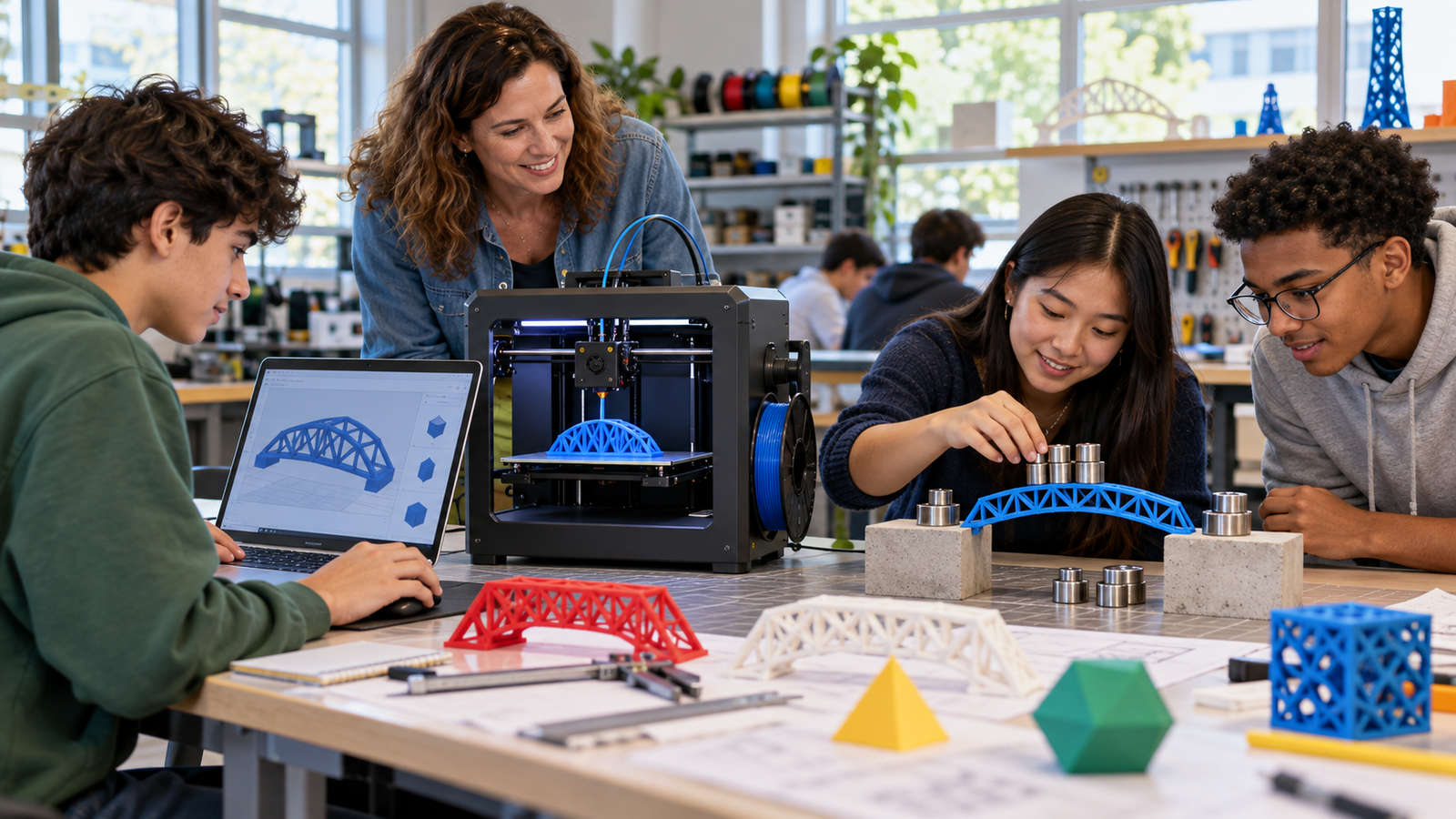
3D printing helps students move from an idea on a screen to an object they can test and improve. Schools can begin with a simple design activity, while universities can use the same process for more advanced engineering and research projects. These programs offer useful places to start.
Tinkercad is a beginner-friendly design tool with classroom lesson plans. Students can combine shapes to make their first 3D model before learning more complex design software.
TeachEngineering offers a classroom activity covering 3D design, printing, and the engineering choices that affect a finished object. It gives teachers a structured project rather than leaving students to print without a learning goal.
MakerBot’s Educators Guidebook provides project ideas across subjects including science, mathematics, engineering, art, and history. Its certification program also offers training for students and educators who want to build their printing skills.
For older students and university courses, Autodesk Fusion for Education introduces professional 3D design tools. Eligible students and educators can use it to develop and refine more detailed projects.
A strong first assignment is to ask students to design a useful classroom object, print it, test it, and revise it. The most valuable lesson is often in that second version: students see how a change to their design affects the real object.
At 3DEMart, we want to help more schools and universities discover that process of designing, making, and learning.
Pingback: The Purpose of 3D Printing Education – 3DEMart